EV battery breakthrough could bring 1,240 mile distances without charging – that's London to Edinburgh x3
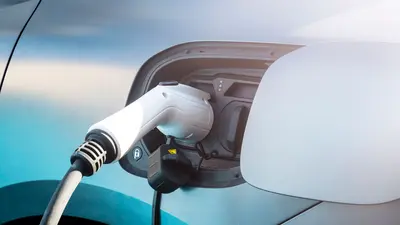
New battery technology could extend the range of electric cars well beyond anything we've seen yet, even exceeding the performance expected from solid state batteries. That could result in ranges of up to 1,240 miles.
In a future EV, a lithium-air battery (also called lithium-oxygen) could use environmental air in the reaction to create usable electrical energy. It could harness the oxygen in the chemical reaction and release it when the process is reversed during charging.
Because the oxygen is external, it means the energy density is higher because its mass doesn't factor in the calculation. That could see lithium-air batteries with five times more energy (on paper) than solid state batteries, although technically, it would gain weight while driving.
The details come from IT Home , which cites CATL researchers as saying that lithium-air batteries "are CATL's future strategic direction". CATL is the world's largest EV battery manufacturer.
While current lithium-ion batteries have slowly been evolving to increase the range available, the next big breakthrough is expected to be solid state batteries, which should appear in production cars from 2027 onwards.
Solid state batteries are expected to deliver ranges around the 750-mile mark and might appear in high-end models in 2027-28.
While lithium-air batteries could exceed this range, we're still some way from the technology making it into an EV battery.
There are some big barriers for the research to overcome, as the current lifecycle of lithium-air batteries is short, with only about 100 charge cycles currently supported, compared to about 2,000 for a lithium-ion battery. They're also inefficient, with much of the energy lost as heat, compared to current lithium-ion cells.
Then there are practical problems with air handling to be worked out. Because the battery draws in environmental air, it has to deal with the other gases (such as nitrogen) and water vapour, filtering out the usable oxygen. Testing has so far used


Comments
No comments yet. Be the first to share your thoughts.