Back to the Moon: how the next lunar mission could pave the way for a new era of space exploration
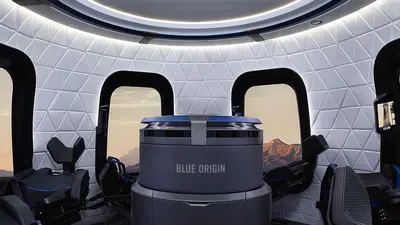
A cheeky trip to the Moon sounds simple enough. We managed it six times more than half a century ago, after all. But NASA’s next planned crewed Moon landing will require – deep breath – several rockets, spacecraft built by competing companies, an orbital rendezvous, and tech that’s never been used at this scale. It’s enough to make something like your shiny iPhone seem as complex as an abacus. Space is humbling, yo.
That next planned Moon landing mission, by the way, is Artemis IV – currently targeted for early 2028. If successful, it’ll put humans on the Moon for the first time since Apollo 17 left in December 1972. NASA also wants to prove that lunar exploration no longer needs to be a rare, one-off event, followed by another wait lasting several decades.
The landing will, naturally, get most of the attention. But for those in the know, getting everything lined up into place beforehand could be the more interesting part
Artemis IV needs several spacecraft to work together
Apollo 11 reached the Moon using an enormous Saturn V rocket carrying its command module and lunar lander in one stack. The spacecraft separated, reconnected in lunar orbit, and eventually brought Neil Armstrong, Buzz Aldrin, and Michael Collins safely home. In short, it’s a veritable legend, as far as historic methods of transport go.
Artemis IV will, however, use a more distributed approach. Four astronauts are expected to launch aboard NASA’s Orion spacecraft on top of the Space Launch System – better known as SLS. Their lunar lander, meanwhile, will have travelled separately, and should already be waiting for them in space upon their arrival.
Orion will dock with the chosen lander, members of the crew will transfer across, and the lander will carry them down to the surface. It must then lift off again, rendezvous with Orion, and return its passengers for the journey back to Earth. I’m just glad I don’t have to do any of the maths.
As for why? Well, one rocket no longer needs to carry ev

Comments
No comments yet. Be the first to share your thoughts.