What is 'Mesoamerican Modern?' Get to know the emerging Latin American design movement where ancient meets new
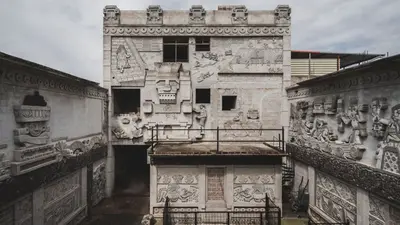
Mexico is home to some of the most exciting modern and contemporary residential architecture in the world today. A new generation of architects is shaping a distinctive design language that reveres and reinterprets the forms, motifs, geometries and siting principles first employed by the Mesoamerican cultures that came before them.
By examining the architecture of Aztec, Maya, Olmec, Zapotec and other Mesoamerican peoples – from their construction of monumental pyramids to their innate understanding of how light and shadow can influence movement through a space – today’s architects are crafting innovative, atmospheric and deeply personal private residences for their clients.
A look inside Geraz Ato's richly-ornamented home. (Image credit: Luis Garvan) For Su Wu , a writer and curator who has called Mexico City home for the past 12 years, the re-emergence of these ancient ideas is akin to a ‘renaissance’, she tells Wallpaper*. Her new book, Mesoamerican Modern (Phaidon, 2026) , includes 16 exemplary residential projects that provide tangible evidence of this movement. ‘These ideas are not some part of dusty prehistory, but they're alive, and they have relevance,’ says Wu.
These ideas are not some part of dusty prehistory, but they're alive, and they have relevance
Su Wu
While Mesoamerican architectural forms and motifs have previously appeared in large-scale cultural projects, such as Mexico City’s Museo Tamayo and Museo Nacional de Antropología, their appearance in private homes is a relatively recent phenomenon. ‘That feels to me like a shift,’ says Wu, who was drawn to the residential sector for precisely this reason. ‘It's not a nation-building effort, but a deeply personal effort based around what people are willing to live with, and a reflection of an expanded sense of what we consider beautiful and valuable.’
While researching and writing the book, ‘there were a few very surprising principles that came up over and over,’ Wu says. To demonstrate these recurri

Comments
No comments yet. Be the first to share your thoughts.