crafted from anti-bird spikes and 3D-printed scaffolds, nests reveal a posthuman architecture
design across species
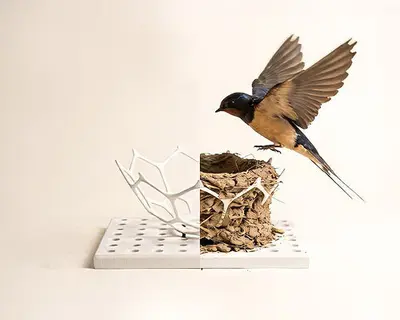
Birds have been building with human-made materials for a long time. Wire, plastic, fabric and other discarded scraps routinely find their way into nests, where they are put to work again and are given new life . In recent years, the examples have become stranger. Magpies and crows have constructed nests from metal spikes installed specifically to keep birds away from buildings. Along the front line in Ukraine, birds have woven fiber-optic cables discarded by military drones into their nests.
These structures show us a model for posthuman architecture that’s quite literal, as their authorship belongs across species. Humans manufacture the materials and alter the landscape, while birds gather, select and reorganize what they find. The nest takes shape somewhere between the two.
birds in Ukraine build a nest from drone fiber-optic cables (see here ) | image © Oleh Malchenko
birds build with the anthropocene
Historian Matthew Holmes examines this relationship in his 2026 paper Feathered Architects: Collecting Histories of Anthropogenic Material in Birds’ Nests (read here ). Holmes argues: ‘ Looking at birds’ nests — and the items within them — is occasionally rewarded with a snapshot of the present state of the Anthropocene. ‘
Human consumption and waste become entangled with animal construction, and leave traces of changing technologies inside structures built by birds. He notes that the phenomenon stretches back well beyond contemporary plastic waste. During the Dust Bowl era, American crow nests made from barbed wire pointed to an agricultural landscape stripped of usable vegetation.
The materials tell different stories these days, with some instances showing synthetic materials to actually be the more desirable choice. Amsterdam coots have accumulated layers of plastic into nests that persist across multiple seasons. This means that a building cycle could be extended, when it once depended on vegetation that decomposed between uses. Rese

Comments
No comments yet. Be the first to share your thoughts.