Camera Firmware Hacks Are Back – AI-Assisted Mods Add Shutter Angle, Open Gate RAW and Film Looks
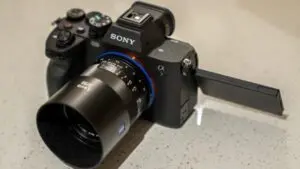
Shutter angle on a Sony a7 IV, OG4K open-gate CinemaDNG on a SIGMA fp, higher bitrates on a Nikon Z30 and in-camera film looks on a 2005 Canon EOS 5D: a new wave of community camera mods is adding features the manufacturers never shipped. Many of the developers say openly that AI assistants helped them take the firmware apart, and in this overview I look at what the projects do, how they work and what can go wrong.
This article is the start of a CineD series, and I look at each project in more detail in the next parts. The trigger for the current attention was a video by photographer and YouTuber Tony Northrup, titled “I hacked my camera with AI (and so can you)” . But the projects themselves have been piling up on GitHub for weeks, for Sony, SIGMA, Nikon, Canon, Ricoh and Hasselblad cameras. We have already reported on two of them: the SIGMA fp open-gate hack that records 3K 3:2 CinemaDNG from the full sensor, and the return of Magic Lantern with a new developer team and support for more Canon DSLRs. Let me say this clearly before we go further: all of these projects are unofficial and experimental, and you use them at your own risk.
We are currently witnessing an avalanche of software projects – not only unofficial camera hacks – because vibe coding is allowing non-developers to make all kinds of tools without knowing a single line of code.
The first open-gate build on the SIGMA fp added a 3000 x 2000 CinemaDNG option. Image credit: Vitali Li
An old idea with new tools
Camera hacking is not new, and some of the most popular filmmaking cameras of the last 15 years owe part of their reputation to it. Magic Lantern started on the Canon EOS 5D Mark II in 2009 and later brought RAW video to a list of Canon DSLRs . Entire productions were shot that way, such as the feature documentary Sea Gypsies on the 5D Mark III with Magic Lantern RAW . Around the same time, the GH1 and then the Panasonic GH2 hack raised the bitrate of Panasonic’s AVCHD codec far beyond the fact


Comments
No comments yet. Be the first to share your thoughts.