The Seestar S30 Plus could be the biggest bargain in astrophotography — here's what it offers
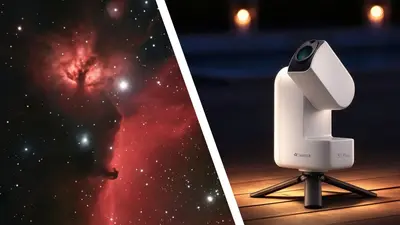
The Seestar S30 Plus has dual 2K cameras for shooting galaxies, nebulae and the Milky Way
It's available today, priced at $499 / €499
It looks like a big upgrade over the S30 and a great first smart telescope
Astrophotographers have never had it so good. Smart telescopes have completely changed the game, making it far easier and cheaper to photograph the night skies — and the new Seestar S30 Plus could be the perfect entry into the hobby.
Technically it slots into Seestar’s ever-expanding lineup between the S30 and S30 Pro models, but it’s effectively a replacement for the no-longer-available base model, offering Pro-level optics at a much lower price.
That price? A mere $499 / €499, compared to $699 for the S30 Pro and $999 for the bigger S50 Pro; I don't have UK pricing, but expect it to be around £450.
And you get a lot for your money: dual 2K (1440 x 2560) cameras with quality optics — one telephoto, one wide-angle — built-in duo-band filters, an included solar filter, tripod and carrying case.
Importantly, it’s also small and light enough to be easily transportable: it weighs just 1.65kg and could easily be slung in a backpack for a hike to a high spot with clear views of the skies.
(Image credit: ZWO/Seestar) It’s all controlled by Seestar’s slick and full-featured app, which does most of the heavy lifting for you and which contains a massive database of breathtaking objects to photograph.
Simply select your target and the S30 Plus will position itself and start snapping away, with the resulting image viewable on your phone screen and getting more detailed over time as the software stacks multiple images.
“Many people are interested in astrophotography but hesitate when they see the equipment and setup traditionally involved,” says Sam Wen, Seestar’s founder.
“With S30 Plus, we wanted to give beginners more room to explore and create without taking away the simplicity that makes Seestar easy to start with. It brings more imaging possibilities into one compact



Comments
No comments yet. Be the first to share your thoughts.