Smart meters to cost the UK billions: 2G switch-off means replacing 12-13 million
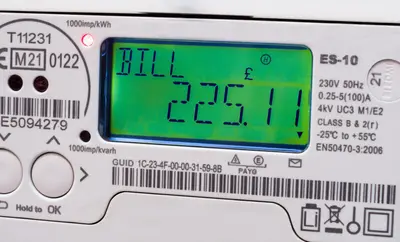
Between 12 and 13 million UK smart meters could stop working properly when 2G and 3G networks are switched off by 2033, and replacing them all is likely to cost around £4 billion ($5.3 billion).
Smart meters have long been a controversial topic thanks to the British government's botched rollout of the technology; they were supposed to be fitted into 80 percent of households by 2020.
But numerous delays and technical hitches, such as consumers finding their meter stopped being smart if they switched energy supplier , hindered progress.
Now, a report from connectivity biz Wirepas, "The European Connectivity Trilemma," shows that it isn't just Brits who have problems, but that other European countries also have their share of smart meter issues and that no two countries have adopted the same approach.
The UK's issues center on the fact that early meters used 2G or 3G cellular connections to transmit energy usage back to the supplier. These continued to be fitted until 4G versions began arriving at the end of 2024, the report says.
This issue was covered by The Register back in 2023 , and again in 2024 .
However, the government had already announced measures to phase out 2G and 3G networks by 2033 several years earlier, back in 2021, so it was known that any meters being fitted would have a limited lifespan.
In fact, 3G services have now already been withdrawn by the networks , and they all plan to phase out 2G ahead of the 2033 deadline . BT/EE will begin closing its network from May 2029, VMO2 will start the same summer, and Vodafone aims to switch off in spring 2030.
The report claims the UK now faces two substantial areas of expenditure as a result. The first covers newer, second generation (SMETS2) meters, where only the communications module needs swapping out, but even this is likely to cost £1.3 to £1.4 billion (c $1.7 to $1.9 billion) before the hardware cost of each new hub is even factored in.
The other is for an estimated 7 million older, first-generation (S

Comments
No comments yet. Be the first to share your thoughts.