She forged papers for the wartime resistance, then traveled the world documenting the impact of industrial change. Now, Dutch photographer Violette Cornelius is finally getting her dues
When we think of the brave souls who put their lives on the line during World War Two to resist German occupation, an artist isn’t the first person who comes to mind.
Yet, in 1940s Amsterdam, the artists’ resistance (Kunstenaarsverzet), a loose network of painters, sculptors, writers, musicians, designers and photographers, played an important role in that effort.
It began as a protest against the Kultuurkamer (Chamber of Culture) set up by the Nazis in 1941 and 1942. Artists had to register with it to exhibit, publish or perform, and Jewish artists were excluded.
Many artists, on principle, refused to join and the resistance grew from there. One of their members was a young photographer called Violette Cornelius.
Among other things, she helped make forged identity documents. Riskily, she also photographed the resistance work itself, and this rare visual record is today listed in UNESCO Nederland’s Memory of the World register.
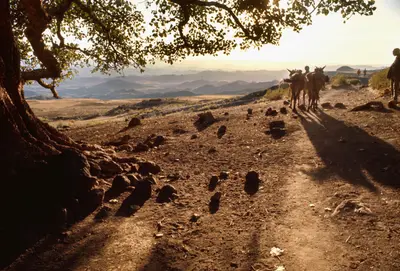
After the war, Cornelius became one of the first generation of women to work as professional photographers in the Netherlands, documenting architecture, refugees and industry. She also travelled the globe, photographing life in India, Peru, Ethiopia and beyond.
Yet much of that work stayed hidden for decades – and in her lifetime, she failed to receive the recognition given to her male peers. Now a major exhibition titled Violette Cornelius Rediscovered at the Nederlands Fotomuseum in Rotterdam aims to put that right.
Violette Cornelius, Amsterdam, 1938–1939 (Image credit: Emmy Andriesse, Special Collections, Leiden University Libraries.)
Still life with egg on a white plate, Amsterdam, 1939 (Image credit: © Violette Cornelius / Nederlands Fotomuseum)
Displaced Hungarians at the Eisenstadt reception camp following the Soviet invasion, Austrian-Hungarian border region, 10–20 November 1956 (Image credit: © Violette Cornelius / Nederlands Fotomuseum) From Bauhaus to the darkroom
Cornelius was born in 1919 in Batavia, now Jakarta, Indonesia, a

Comments
No comments yet. Be the first to share your thoughts.