The Iran War led to a decline in carbon emissions in 2026. It doesn’t mean we’ve turned a corner on fossil fuels
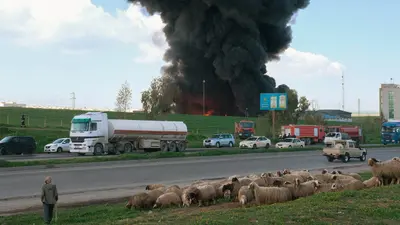
As the war in Iran raised global oil prices, oil emissions dropped and solar and wind power expanded.
That led to a slight decrease in global greenhouse gas emissions in 2026. But it’s not a sign that we’ve turned the tide on fossil fuel use, experts warn.
Global carbon emissions from fossil fuels are projected to decrease by 0.4% in 2026, according to research presented at the United Nations’ 31st Conference of the Parties (COP31) climate talks in Turkey and published in the journal Nature Climate Change .
That change was driven by a drop in oil emissions, which will be about 1.9% less than the year prior.
Oil emissions declined as gas and diesel pump prices rose 10% to 50% across the United States, China, and the European Union, compared with 2025, the researchers noted.
But this change in global emissions is “not a sign that emissions have peaked from the transition to cleaner energy,” they wrote.
In other words, there hasn’t been a global turn away from fossil fuels and toward renewable energy.
A satellite view of smoke plumes rising from Saudi Aramco’s refinery complex and oil terminals in Jazan, Saudi Arabia, after coordinated Houthi strikes launched from Yemen. The attacks disrupted fuel exports through the Red Sea’s Bab al‑Mandeb Strait and marked a major escalation in the Iran–Saudi conflict fought through the Yemen war. Imaged July 26, 2026. [Photo: Gallo Images/Orbital Horizon/Copernicus Sentinel Data 2026/Getty Images]
Instead, this dip was a short-term response to the high oil prices and supply chain snags caused by the Iran war. And that means we have more to do to expand clean energy and stop the surge in plant-warming greenhouse gas emissions.
“A decline in fossil CO2 emissions is encouraging, but a reduction driven partly by geopolitical shocks is not a sustainable climate solution,” Pierre Friedlingstein, director of the Global Carbon Budget Office at the University of Exeter in England and leader of the study, said in a statement .
The s



Comments
No comments yet. Be the first to share your thoughts.