How CRISPR Could Mark Mutated Cancer Cells for Termination
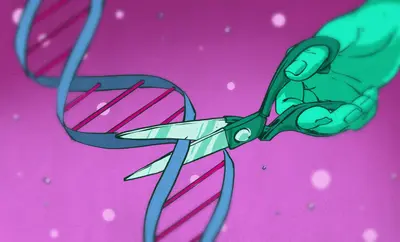
Over the past decades CRISPR, short for “clustered regularly interspaced short palindromic repeats”, has become somewhat of a household name, holding the promise of directly addressing genetic mutations by effectively removing, silencing, or even fixing them. Yet the original purpose of CRISPR is slightly less cute and cuddly: the evolutionary origin of these DNA sequences is that of a core component of the prokaryotic immune system.
In most medical applications today we only try to use CRISPR to detect sequences and then apply enzymes such as the well-known Cas9 to cut DNA at specific locations in the process of gene-editing. In a recent study (paywalled, bioRxiv pre-print ) by Jingkun Zheng et al. in Nature such benign enzymes are dropped for Cas12a2, which turns a detection event into the release of a DNA-destroy enzyme as the molecular equivalent of a guided missile.
The pitched use case here is the detection of cancer-cell specific mutations in the DNA, following which the tumor cells will be instantly shredded from the inside. This could theoretically provide a cure for many cancer types, but should we expect to see this kind of therapy approved any time soon?
The Original CRISPR
CRISPR-based immunity overview. (Credit: Guido4, Wikimedia )
What we call CRISPR is quite literally what the name says: clustered occurrences of repeats with spacers made of genetic code fragments in the prokaryotic DNA. These can be considered to be the memory of the prokaryotic immune system, with genetic sequences from e.g. invasive viruses and bacteriophages embedded in the organism’s own DNA as these spacers.
In prokaryotic organisms like bacteria these CRISPR arrays are accompanied by multiple CRISPR-associated systems (CAS, or Cas): genes that are translated into proteins which are associated with these CRISPR arrays. Of these, CRISPR-associated protein 9 ( Cas9 ) is a protein that that performs double-strand DNA cutting action when provided with a transcribed RNA copy (cr


Comments
No comments yet. Be the first to share your thoughts.