Microsoft lobbies against potential ban on Chinese optical networking gear for AI data centers as FCC mulls restricting imports
Microsoft, the tech giant that is building 35 data centers around the U.S. and has plans for 134 more, has reportedly met with the White House Office of Science and Technology Policy and the National Security Council as the FCC is considering an import ban on Chinese optical transceivers . According to Reuters , the company, alongside the Information Technology Industry Council (ITI), is lobbying against the move.
Go deeper with TH Premium: AI and data centers
(Image credit: Microsoft) The data center cooling state of play
The custom AI ASIC state of play
America’s AI chip rules keep changing — and the rest of the world is paying the price
GTC 2026: Ian Buck press Q&A transcript — VP of Hyperscale and HPC speaks out on shelving CPX and shipping LPU decode this year
Demand for data center CPUs has surged, and AI agents are responsible
“It really threatens to arguably grind (the data center rollout) to a halt,” ITI Executive Vice President of Policy and General Counsel John Miller said. He also added, “Those chips, without optical transceivers, literally could just sit there waiting around unutilized until you actually have the transceivers to essentially connect them together,” referring to the AI chips that data centers use.
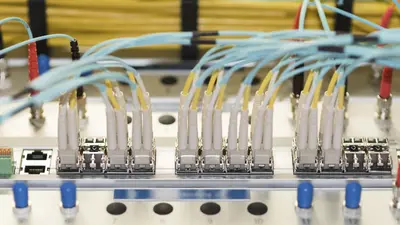
Optical transceivers are tiny modules plugged into hardware that convert their electrical signals into light signals, allowing data to be transmitted as light pulses across fiber optics. Data centers increasingly use optical transceivers and fiber optics to transmit data between AI GPUs and server racks, as they’re faster, offer lower latency, require less power, and generate less heat compared to traditional copper connections. However, Chinese companies currently supply 66% of the global market, meaning banning them from supplying data centers in the U.S. would more than halve the available supply, thereby exacerbating the various shortages that have been pummeling the industry .
However, there are concerns that some of these transceivers co


Comments
No comments yet. Be the first to share your thoughts.