A closer look at Verano, AMD's first step toward a Zen-based superchip to rival Nvidia's Vera Rubin
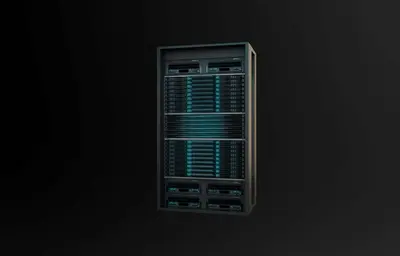
AMD's upcoming Verano processors aren't like any Epyc CPUs we've seen before. Rather than general-purpose workloads, Verano is designed specifically to power AMD's next generation of GPU servers.
In an interview with The Register during a press event in Las Vegas last week, Madhu Rangarajan, corporate VP of AMD's compute and enterprise AI products business, described Verano as being the first step towards building something that more closely resembles Nvidia's Vera Rubin superchips.
"Verano is really designed for an integrated CPU+GPU rack scale solution," he said. "From that perspective, I wouldn't say the CPU is a competitor to Vera. In a head note, I'd say the Verano+GPU solution is a competitor to Vera+Rubin."
For reference, Vera Rubin and the GB200 and GB300 that came before it aren't your typical server platforms. Instead they're more like an enormous single-board computer combining CPUs and GPUs into a tightly-integrated package. Each of Nvidia's superchips joins a single 88-core Vera CPU and 1.5 TB of LPDDR5X memory to a pair of Rubin GPUs via Nvidia's speedy NVLink-C2C interconnect.
Rangarajan tells us Verano will be the host CPU for a similar class of product using AMD GPUs, and much like Nvidia's superchips, the CPU will also use notebook memory rather than conventional RDIMMS.
However, unlike Vera, which is also being deployed as a standalone CPU in storage servers and agent sandboxes, Verano has a singular purpose: keeping its GPUs fed. (We assume they'll be MI500X GPUs.)
This design choice reflects AMD's philosophy of one SKU per workload. As such, Verano's core count, clock speeds, memory bandwidth, power, and I/O have been rebalanced to keep its GPUs fed and not much else.
Under the hood
If we were to peel back Verano's heat spreader, the chip looks a lot like the Venice Epycs we looked at back in September. It features either six of AMD's core complex dies (CCDs) for a total of 72 high-frequency cores clocking to 5.3 GHz, or 192 density-optimized co



Comments
No comments yet. Be the first to share your thoughts.