Google Fitbit Edge review: The Fitbit we loved, now in its Google era
Google Fitbit Edge: Two-minute review
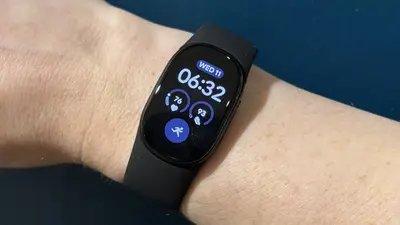
(Image credit: Future) The Google Fitbit Edge occupies a middle tier in Google’s new wearables lineup. On the lowest tier you’ve got the Google Fitbit Air , Google's cheapest tracker, and a screenless Whoop competitor, which collects information and displays it all in the Google Health app, with no interaction on-wrist.
At the other end of the spectrum you have the all-singing, all-dancing Google Pixel Watch 5 , with its bright domed interactive AMOLED display and full Wear OS functionality. It’s the most interactive a Google wearable can get without you duct-taping one of the new Googlebooks onto your wrist.
In the middle, but leaning more towards the Fitbit Air end of the spectrum, is the Google Fitbit Edge. It’s got a touchscreen like the Pixel Watch 5 (though it's not as bright), GPS (missing on the Air), and a tactile button, enabling interactions such as media control and simple notification viewing, but not nearly as much as the Google Pixel Watch series. You can also swap straps to make it look more jewelry-like or watch-like.
On the other hand, it automatically detects workouts like the Fitbit Air, lasts a week between charges, doesn’t offer watch features like NFC payments or call management, and is very lightweight.
If you've used a Fitbit Charge or a Fitbit Luxe in the past, you’ll be familiar with the Google Fitbit Edge’s shtick. The screen enables you to pick and choose your workout starting point, manually pause or stop it, set timers, start an ECG scan, and offers other key functionalities. It inherently makes it more useful, while not being engaging enough to tempt you to tinker with it, or make it feel like a second phone. Meanwhile, it hums away in the background offering Health Guardian features like Blood Pressure Trends, Irregular Rhythm Notification, and Insulin Resistance estimations.
The Edge has a slightly different sensor array to the Air, which is capable of delivering ECG scans and detecting ambient



Comments
No comments yet. Be the first to share your thoughts.