"The lens is the best in the world for capturing a face" –Leica celebrates 60 years of the Noctilux
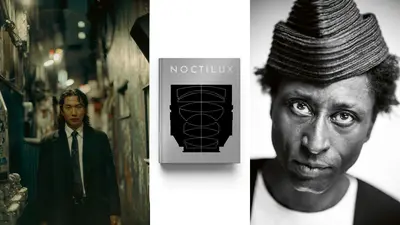
In 1966, Leica unveiled a lens at the Photokina trade fair with an ambitious aim: to capture light at night. The Noctilux 50mm f/1.2 was the first series-produced Leica lens with aspherical surfaces, and it went on to become one of the most celebrated lenses in camera history.
Now, to mark its 60th birthday, Leica is releasing a book telling the Noctilux story. Titled simply Noctilux , it charts how the lens family developed from that first 50mm f/1.2 to the newest wide-angle model, the Noctilux 35mm f/1.2 .
Noctchrome, Yakushima, Japan, 2025 (Image credit: © Satoru Watanabe) Along the way, it covers the Noctilux 50mm f/0.95 Asph and the Noctilux 75mm f/1.25 Asph, each of which set new standards for speed and design.
The book explores the development of the aspheric technology that has made such extreme apertures possible, by correcting the kind of optical flaws that get harder to control as apertures get wider.
We also get a glimpse behind the scenes with Peter Karbe, senior managing expert in optics at Leica, and Dietmar Stuible, head of optics development at Leica Camera AG.
Model Keziah Jones, Artist Residency Les Récollets, Paris, Frankreich, 2023 (Image credit: © François Rousseau)
Model Shoko Plambeck, Tokio, Japan, 2026 (Image credit: © Jason Roman)
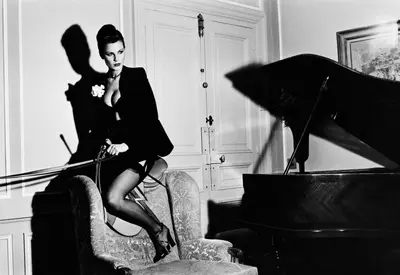
Model Kirsten Owen, Indien, 1989 (Image credit: © Paolo Roversi) Peppered throughout the book are some incredible photos taken with the lenses, ranging from intimate black-and-white portraits and a moody street portrait in a neon-lit alley, to a magnolia tree in front of a house at dusk and a forest scene in deep shadow.
As you flick through them, the signature look of Noctilux lenses becomes clear: razor-thin depth of field, soft, glowing backgrounds and the ability to work in very low light.
One such series is by French photographer François Rousseau, who used the Noctilux 75mm f/1.25 Asph to photograph guests at the Résidence des Récollets in Paris – an artists’ and scientists’ residence. It was commissi
Comments
No comments yet. Be the first to share your thoughts.