Minimalist, human and crafted – why it’s easy to love Kengo Kuma’s architecture
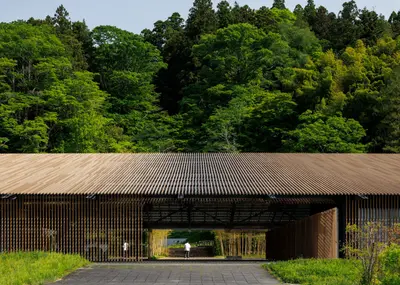
One of Japan’s most globally celebrated architects, Kengo Kuma has carved a singular creative path, designing a constellation of award-winning structures around the world – from restaurants and residences to theatres and public spaces.
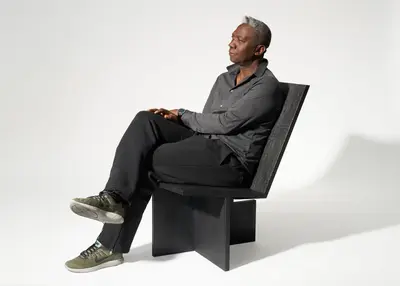
Kengo Kuma (Image credit: ©Designhouse) Who is Kengo Kuma?
In 1964, a ten-year-old Japanese schoolboy stood in front of Kenzo Tange’s new Yoyogi National Gymnasium in Tokyo. Struck by the beauty of the dynamic curves of concrete hovering lightly above the ground, he immediately dropped dreams of being a vet – and vowed to become an architect.
Fast-forward more than six decades, and it’s safe to say Kuma made a wise career choice.
(Image credit: Daici Ano)
(Image credit: Daici Ano) Kengo Kuma's approach
His architectural work is often instantly recognisable. Drawing deeply on traditional Japanese aesthetics, the atmosphere is typically minimalist, modern and crafted. A sensitivity to emptiness, a play of light and shadows, soft boundaries between inside and out, rhythmic joinery and a natural material palette (from wood and bamboo to paper and stone) are further elements written into the DNA of his spaces.
Human-scale buildings that harmonise with their setting – culturally, environmentally, materially – are key, with nature typically being the most important component for many of the projects brought to life by his prolific studio, Kengo Kuma & Associates (KKAA ).
V&A Dundee, Scotland (Image credit: Benedict Redgrove) This is reflected in a litany of structures across the Japanese archipelago – take the intimacy of the layered eaves, timber joinery and plant-filled spaces of Japan National Stadium (2019), used in the Tokyo Olympics; the temple-like serenity of the clean lines, angled shadows and bamboo walkways of Nezu Museum in Tokyo (2009); and the chequered façade of travertine and air, layered and light-filtering, at private residence Lotus House (2005) in the mountains of Kanagawa Prefecture.
Nezu Museum (Image credit: Tatem

Comments
No comments yet. Be the first to share your thoughts.