Los Alamos boffins to put NextSilicon's Maverick-2 through natural selection in Darwin testbed
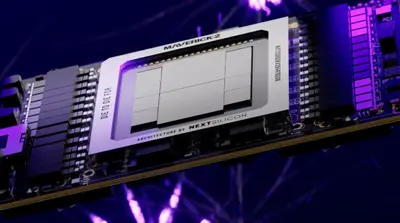
The US Department of Energy (DoE) is deepening its relationship with HPC-first chip startup NextSilicon.
During Supercomputing 2026 in Chicago on Monday, the Israeli startup revealed that the agency had deployed its second Maverick-2 cluster in the Darwin testbed at Los Alamos National Laboratory (LANL).
The deployment comes just six months after Sandia National Laboratories powered on NextSilicon’s first supercomputer, which features 64 nodes and 128 of the company's “runtime-configurable” accelerators.
NextSilicon’s latest DoE system is comparatively smaller, comprising just four accelerators, yet for LANL, the system is arguably more important despite its size.
Darwin, LANL’s chief scientist Galen Shipman, tells El Reg is a “long-lived testbed environment where we bring in newer technologies for evaluation.”
“It gives us the ability to work with the technology much more quickly, and integrate it with other components of our architecture in our environment,” he explained.
Smaller systems like the Maverick-2 cluster now deployed in Darwin allow LANL to validate and port a wider array of codebases to the chips, identify problems, and work with NextSilicon to not only address them, but directly influence the capabilities of future chips, Shipman explained.
In other words, Los Alamos’ interest in Maverick-2 is the first step toward larger scale deployments of NextSilicon silicon in future DoE supers. For this, hands-on access is kind of important as many of LANL’s most important workloads can’t exactly be run on public systems.
A compute chameleon
LANL is one of several labs tasked with ensuring that the US’ nuclear deterrent remains effective decades after underground testing was banned. The lab is also responsible for running simulations on energy sources like fuel candidates for future fusion reactors. Both of these workloads, Shipman tells us, fall into a category called multi-physics simulations.
These workloads aren’t really one workload, but multiple simulation



Comments
No comments yet. Be the first to share your thoughts.