“The drivers came back – including drivers who have raced in Formula 1 – and said this was the fastest car they had ever driven”: Formula E has stopped proving electric racing works and now wants to redefine motorsport
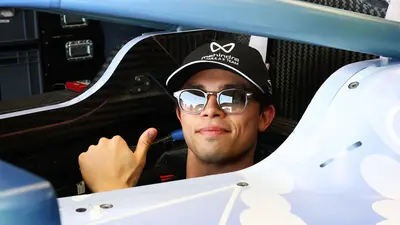
A Formula E car can cross the finish line with as little as 0.1% of its battery remaining. That does not mean the driver has spent the closing laps desperately hoping it will make it.
“The car is the smartest piece of technology we have,” Andretti Formula E driver Jake Dennis told me at the Tokyo E-Prix. “It is always telling you when to lift and brake, using lights and beeps in your ears.”
If something changes during the race, such as a safety car or Full Course Yellow, the system recalculates the amount of energy available and creates a new profile for the remaining laps.
“At some point, you simply have to trust and follow the car,” Dennis says. “It is a serious piece of equipment, and that is only about 10% of what the car can do.”
This may be motor racing, but outright speed is only part of the competition. In Formula E, drivers must consider energy consumption, regeneration, track position and the aerodynamic benefit of following another car, often while racing in a closely packed group.
The electric championship is now preparing to introduce GEN4 , a permanent all-wheel-drive car with up to 600kW – roughly 800bhp – and enough acceleration to reach 62mph in around 1.8 seconds. According to Formula E, that gives it a 30% faster launch than a current Formula 1 car.
(Image credit: Getty/Formula E) After speaking to drivers, team principals and Formula E’s senior technical and sustainability figures in Tokyo, however, it became clear that GEN4 is only the visible part of a much larger operation.
Formula E is no longer trying simply to prove that electric racing works, which was its primary goal when it started. These days, it is exploring what happens when software, energy efficiency and sustainability become fundamental parts of motorsport.
A championship with three jobs
Formula E was founded in 2014 partly to demonstrate the possibilities of electric mobility, and back then, the limitations were difficult to ignore. The first-generation car could not complete an


Comments
No comments yet. Be the first to share your thoughts.