A legendary Pioneer TV range and iconic NAD amplifier have been inducted into the What Hi-Fi? Golden Anniversary Hall of Fame
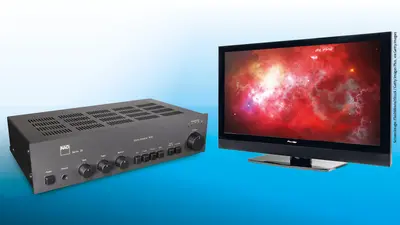
The What Hi-Fi? Hall of Fame is a special place. It’s home to products that have made a lasting impression not just on our review team but on the industry as a whole.
It covers a wide range of products and categories, and features some of the finest, most memorable kit ever to pass through our test rooms.
And, given that What Hi-Fi? is currently celebrating its 50th anniversary, we thought it was the perfect time to pay a special homage to two of our HoF entrants at our recent What Hi-Fi? Awards ceremony, one from the hi-fi and audio side and the other from the world of TV and home cinema.
Here, then, are our picks. Join us as we celebrate two products which will go down as absolute classics of their time
(Image credit: NAD) If we were to list the most important stereo amplifiers of all time, NAD’s original 3020 would surely feature. It is widely claimed to be the best-selling integrated amplifier ever, but its contribution to hi-fi is about more than mere sales figures.
The 3020 cost just £71 in 1979 and established the fledgling New Acoustic Dimension brand as a serious player as well as a value-for-money brand. More than that, it jump-started the market for high-performance budget amplification
The NAD 3020 had a clever power-supply design that allowed it to sound way more muscular than its modest claimed power output of 20W per channel would suggest, and it was engineered to perform well with complex, real-world speaker loads.
It was decently equipped, too. The earliest version came with a moving-magnet phono stage, two line-level inputs and a tape loop – plenty at a time when vinyl replay was king.
Early on, the 3020 didn’t have a great reputation for build quality or reliability, but as the build got better over subsequent generations, even its cheap spring-clip speaker terminals made way for proper speaker-cable binding posts.
And, NAD continued to evolve the design with better-sounding, more purist versions that boasted cleaner signal paths.
It culminated in

Comments
No comments yet. Be the first to share your thoughts.