Lemon celebrates the Victorian parlour with its first British showcase
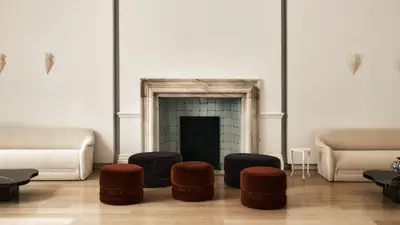
The parlour is one of those domestic spaces that has been edited out of most modern homes. Taking its name from the French parler , to speak, the English parlour was a formal entertaining space commonly found in the middle- and upper-class townhouses and suburban villas of the 19th century. Reserved for Sundays and special occasions, it was where households displayed their finest furniture to convey their social standing and impeccable taste.
For one day only last week, the spaces within the listed townhouse, which dates from 1858, were transformed into Lemon’s contemporary interpretation of the parlour (Image credit: Matteo Verzini) ‘I’ve been interested in [Victorian parlours] forever,’ says Kevin Frankental, co-owner and creative director of Lemon . ‘I love the idea of it being a specific place for gathering...the idea that there’s multiple places to sit, and be together, you can do so many things in a room like this.’
Kevin Frankental, co-owner and creative director of Lemon, co-founded the company in 2007 alongside Jaco van Staden (Image credit: Matteo Verzini) When we speak, Frankental is busy installing Lemon’s first British showcase in two grand Victorian rooms in the Irish painter Sir John Lavery’s former home in South Kensington, London. Most recently used as restaurant dining rooms, the spaces within the listed townhouse, which dates from 1858, have been transformed into Lemon’s contemporary interpretation of the parlour. Furniture, lighting and objects designed by Frankental and his long-term collaborator Yaniv Chen are arranged in conversational groupings against a backdrop of parquet floors, lofty ceilings and ornate plasterwork.
The collection includes British-made furniture, lighting and objects designed by Frankental and his long-term collaborator Yaniv Chen (Image credit: Matteo Verzini) Founded in 2007 and based between Cape Town and Amsterdam, Lemon has carved a niche for itself with furniture that draws on a range of 20th-century styles. The



Comments
No comments yet. Be the first to share your thoughts.