Today I learned your phone's camera exists because NASA wanted smaller cameras for space missions
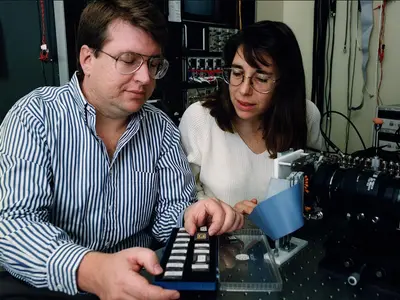
Every time you snap a photo on your phone, you're using technology that was designed for deep space. The CMOS image sensor found in almost every smartphone camera was invented at NASA's Jet Propulsion Laboratory (JPL) in the early 1990s, by a team looking for ways to drastically reduce the size of cameras on spacecraft.
Eric Fossum, the engineer who led that team, later said that cell phones became the "killer application" for his invention and he wasn't exaggerating. Yole Group estimates say the CMOS image sensor market hit $25.3 billion in 2025, with mobile devices accounting for roughly 63% of that revenue.
Shrinking a camera for space
In the early 1990s, then-NASA administrator Daniel Goldin pushed a "faster, better, cheaper" approach to space science missions. Smaller payloads meant smaller rockets, which put the cameras on future spacecraft squarely in the crosshairs.
The problem was the charge-coupled device (CCD), the dominant image sensor of the era. CCD cameras were made of many separate parts and drew a lot of power, according to a 2013 presentation by Fossum . They also didn't play well with other electronics, which made it hard to squeeze a whole camera into a smaller package.
Older missions had it even worse. The same presentation notes that the vidicon cameras on NASA's Voyager probes weighed 38.2kg. That's heavier than most checked bags airlines will let you fly with.
Fossum's answer was the CMOS active pixel sensor, built with the same transistor technology found in ordinary computer chips. CMOS imagers had been tried before, but they produced noisy pictures. Fossum's team cut that noise using a technique called intra-pixel charge transfer, according to NASA .
Since every pixel amplifies its own signal, the rest of the camera's electronics can sit on the same piece of silicon. That's why you'll often hear it called a "camera on a chip." JPL says the design needed about one-hundredth of the power of the sensors it replaced.
How it ended in your pocke



Comments
No comments yet. Be the first to share your thoughts.