The Lomo72 is a $79 half-frame film camera for people stuck between a Kodak and a Pentax
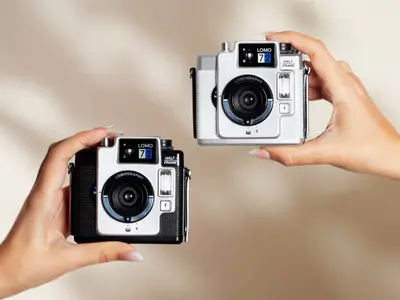
Back in 1959, Olympus figured out that if you cut a 35mm frame in half, people would happily shoot twice as many photos. The Olympus Pen became a hit, and half-frame cameras had a full-blown moment across 1960s Japan. Then they faded away, as trends do. Now they’re back, thanks to the Pentax 17, the Fujifilm X half, and a generation that discovered film right as film got expensive. Lomography’s newest entry is the Lomo72, and the name gives away the pitch: 72 shots from a regular 36-exposure roll.
At $79, the Lomo72 sits between disposable-style plastic shooters and the roughly $500 Pentax 17. Lomography gave it a multi-coated 27mm glass lens, a metal-plated body in black or silver, and simple two-zone focusing for nearby subjects or distant scenes. Shutter speed is fixed at 1/100 of a second, with a Bulb mode for long exposures when you’re feeling brave. A built-in flash, colored gels, and a multiple-exposure switch leave room for happy accidents. It’s up for preorder on Lomography’s site, with delivery promised before Christmas Eve.
Designer: Lomography
Half the Frame, Double the Roll, and Built-In Diptychs
Half-frame means the camera exposes only half of a regular 35mm frame, giving you a tall 17 x 24mm image instead of the usual wide 36 x 24mm one. Two photos fit where one used to live, so a 36-exposure roll stretches to 72. Run that against your own lab bill and it gets fun fast. If a roll plus developing and scans costs you $30, each shot drops from about 83 cents to roughly 42. That buys more freedom to photograph your lunch, your cat, and your friend’s slightly blurry dance moves.
The vertical frames also pair up naturally, so two consecutive shots sit side by side on the negative as a diptych. Half-frame shooters have played with this since the Pen days, matching a wide scene with a close detail, or a face with its reaction. One tip for first-timers: tell your lab you shot half-frame so it can scan the frames correctly. The trade-off is a smaller negat

Comments
No comments yet. Be the first to share your thoughts.