US Air Force announces new focus on sensors and autonomous warfare — with drone-killing kit top of the list
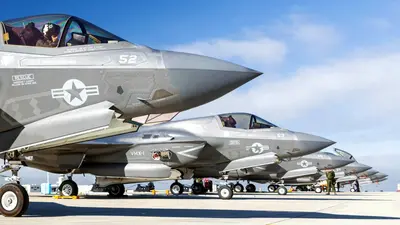
US Air Force puts sensors and AI at the heart of modernization
New strategy shifts attention from interception toward earlier detection and coordinated responses
Autonomous systems are becoming central to the Air Force's future combat planning
The US Air Force has introduced a new modernization plan that focuses on advanced sensors, artificial intelligence and autonomous systems to counter increasingly advanced aerial threats.
Its new Force Design 2026 changes how the service plans to defend against air attacks and prepare for future wars.
The approach prioritizes finding and tracking threats early and coordinating responses, rather than depending mainly on weapons that intercept and destroy incoming aircraft or drones .
New strategy prioritizes sensors, AI, and networked warfare
The updated framework identifies sensors, interconnected networks and artificial intelligence as technologies increasingly influencing modern air defense operations.
These capabilities could help military forces identify incoming threats, coordinate defensive responses and manage multiple unmanned aircraft operating simultaneously.
Air Force officials also acknowledge that technological developments are creating difficulties for traditional approaches to generating military airpower.
Systems previously considered effective may encounter limitations when confronting increasingly sophisticated weapons and interconnected defensive networks.
“New technologies are enabling fantastic capabilities that were unimaginable just a few years ago, but those same technologies threaten some of the ways we have historically generated airpower,” said Lt. Gen. Chris Niemi, deputy chief of staff for Force Modernization and chief modernization officer.
The strategy also emphasizes combining autonomous capabilities, advanced detection equipment and command systems with existing aircraft.
Such integration would allow different military platforms to coordinate operations, particularly when conventional communicat



Comments
No comments yet. Be the first to share your thoughts.