united artists for climate calls for art and culture to take stronger role in climate action at COP31
artists call for culture in climate policy at COP31
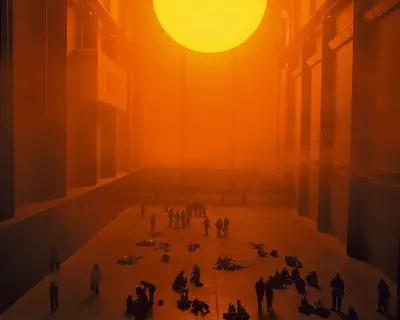
For its second edition, United Artists for Climate organizes a collective international campaign inviting artists to share their work, creative practices, and environmental initiatives through Instagram. The contributions highlight different ways of engaging with ecological issues , from collaborations with local communities and more responsible approaches to artistic production to new perspectives on humanity’s relationship with the natural world. The campaign brings together established and emerging creatives, including Judy Chicago, Olafur Eliasson , Fabian Knecht , Janet Laurence, John Gerrard, Cristina Iglesias , Julian Charrière, Anish Kapoor , Camille Henrot, Carolina Caycedo, Moffat Takadiwa, and Moara Tupinambá.
Beyond raising awareness , the initiative puts forward a set of demands directed at climate decision-makers. Its collective message calls for accelerated climate action, the recognition of art and culture as essential components of climate policy, and social justice at the center of environmental transformation. More specifically, the campaign calls for global emissions to be cut by 18 percent over the next four years and for peak global warming to be limited to 1.7°C. These figures are presented as the movement’s demands, rather than agreed international targets.
A second central demand is to recognize culture as an essential part of climate action and integrate the Culture Global Stocktake into climate decision-making. The first Culture Global Stocktake was launched at COP31 on November 10th. Developed through a year-long international and participatory process involving cultural practitioners, Indigenous knowledge holders, young people, researchers, institutions, and policymakers, it assesses how culture contributes to climate action, identifies gaps in current policy, and sets out recommendations for bringing cultural perspectives into climate frameworks. Its scope extends beyond contemporar



Comments
No comments yet. Be the first to share your thoughts.