Before Nikon and Canon took over, this long-forgotten 1950s German camera quietly pioneered modern SLR ergonomics
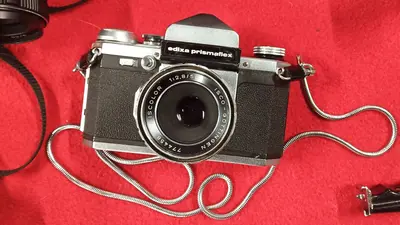
Edixa is one of the great German firms that gave rise of the modern 35mm SLR.
The Wirgin Kamerawerk had been founded in 1920 by brothers Heinrich, Max and Josef Wirgin. Before the Second World War, they made relatively cheap cameras under the Gewirette and Edinex brands, along with a few lesser-known names.
The brothers were Jewish and, in 1938, they fled to America to escape Nazi persecution. After the war, Heinrich Wirgin (by then known as Henry Wirgin) and Josef (now using the American spelling, Joseph) returned to Germany to restart the family business.
Henry went on to lead Wirgin Kamerawerk while Joseph seems to have faded into obscurity. Max Wirgin remained in the United States, becoming the US importer of both Exakta and Edixa cameras through his Camera Specialty Company.
By the late 1940s, Wirgin was again producing cameras and looking for products with which it could compete in the rapidly changing post-war market. Which brings us to Heinz Waaske, the 24-year-old precision mechanic who joined Wirgin in 1948.
He proved to be an exceptionally talented designer (who later went on to design the Rollei 35) and progressed rapidly through the prototype department, eventually becoming chief designer.
During the early 1950s, the 35mm SLR was beginning to emerge as a serious alternative to the rangefinder as new features like instant-return mirrors and automatic diaphragms became available.
East German manufacturers already had cameras such as the Praktica and Contax S, but the Japanese SLR industry that would eventually dominate the market had barely begun.
Waaske's camera appeared in 1954 as the Komet. Although some prototype or very early examples carry that name, Wirgin encountered objections from a West German firm that made both automotive and bicycle parts under the Komet name.
Wirgin had also introduced a 35mm rangefinder camera in 1953 called the Edina, to replace its older Edinex cameras, but Kodak objected as it was too close to its Retina cameras.
Wirgin


Comments
No comments yet. Be the first to share your thoughts.