A sled dog bit wildlife photographer Guadalupe Laiz and left a permanent scar. It taught her to see Arctic dogs as something more than pets
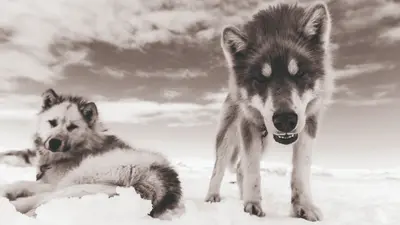
On one of her early trips to Baffin Island in the Canadian Arctic, wildlife photographer Guadalupe Laiz misread a warning from one of the sled dogs that she'd come to document. The dog's teeth closed on her hand and leg, and the healing that followed was slow and painful.
"The scar etched into my hand remains today; a permanent reminder that these animals are not pets, and their trust must be earned," she writes.
For a while afterwards, she couldn't imagine going back. But she did, and the results are collected together in a new book titled Echoes of the Pack , published by Images Publishing .
The culmination of a project that took up over three years of her life, it's a portrait of the sled dogs that have partnered with Inuit communities for generations.
In particular, it focuses on the dogs farthest from town, tethered to the sea ice in prolonged isolation, whose lives are largely unseen and rarely photographed.
What's striking about these images is how personal they feel. Many of them are shot low and close, at the dogs' eye level; her intention was to meet each one "as a singular being, with its own temperament and story".
During the Arctic spring, when the sun barely sets, she often stayed beside the dogs through the night, listening to their breathing and their howls.
The Work of Ancestors (Image credit: Guadalupe Laiz / Images Publishing)
A Careful Kindness (Image credit: Guadalupe Laiz / Images Publishing)
Ancient Eyes (Image credit: Guadalupe Laiz / Images Publishing) In the main, her pictures capture small moments: waiting, howling, sleeping, bristling, running. "In these moments, the camera becomes less an observer and more a listener," she writes in the book.
Drawn to dogs
Laiz, who was born and raised in Argentina, has spent more than two decades photographing animals in some of the world's most remote places, from elephants and gorillas in Africa to the horses of Iceland.
She first came to the Arctic nearly a decade ago to photograph polar bears, a



Comments
No comments yet. Be the first to share your thoughts.