Software issues have even reached Mercury as BepiColombo probe arrives in uncertain state
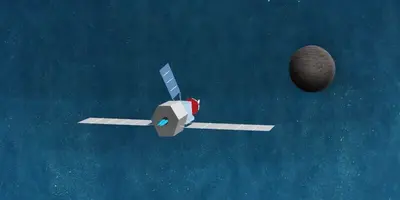
Humanity’s third-ever mission to Mercury has arrived, but a last-minute “software issue” has complicated matters.
The BepiColombo mission is a joint effort by the European Space Agency (ESA) and Japan’s Aerospace Exploration Agency (JAXA). Reaching Mercury is not easy because its gravity is weak and its orbit is fast. The tiny planet’s proximity to the Sun further complicates matters, because our star’s gravity accelerates everything that falls towards it.
BepiColombo’s journey has therefore seen it whiz past Earth once, Venus twice, and Mercury six times on a complicated path the two space agencies designed to slow it down sufficiently to be captured by mercurial gravity, while also keeping up with its rapid orbit.
In 2024, the craft’s thrusters underperformed, leading the ESA and JAXA to re-plot the planned trajectory and reschedule its arrival at Mercury from mid-2025 to this past weekend.
The ESA’s operations team sent the commands to insert BepiColombo into orbit on Friday. On Sunday the craft phoned home with news that it entered orbit. A little later, however, the ESA revealed “the thruster burn was shorter than planned following a software issue.”
The spacecraft is safe, but the ESA says it is “working to understand what happened” and promised updates early this week.
Readers may recall that a pair of NASA missions to Mars are also experiencing software glitches , which have in recent weeks become all-too-prevalent on Earth, too.
Fingers crossed
If all is well, BepiColombo will deploy two orbiters.
The ESA’s craft is called the Mercury Planetary Orbiter (MPO), which the ESA says will map the planet, assess the composition of its surface and interior, measure its magnetic field, and even gather data that scientists hope will “test Einstein's theory of General Relativity to an unprecedented level of accuracy.”
JAXA’s Mercury Magnetospheric Orbiter (MIO) will also investigate the planet’s magnetic field, plasma, dust, and atmosphere.
Both orbiters are extraordi


Comments
No comments yet. Be the first to share your thoughts.