Seashells inspire US model that could unlock ultra-tough nanocomposite materials
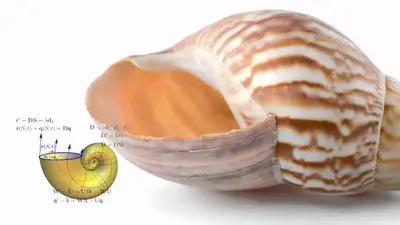
Researchers in the US have just unveiled a predictive model inspired by natural seashells, that could make it easier to produce tough synthetic materials at the nanoscale.
The project brought together researchers from the US Department of Energy’s Pacific Northwest National Laboratory (PNNL) and Cornell University. The team developed a predictive model for building structures that mimic biomaterials, such as seashells.
The model could show how to incorporate nanomaterials into growing crystals based on their surface chemistry. The structures examined in the study form at the nanoscale, roughly 10,000 times smaller than the width of a human hair. To understand how they form, the team combined chemical theory with specialized instruments that can track changes at the atomic level.
Elias Nakouzi, PhD, a materials scientist at PNNL and one of the project leaders, said the team confirmed the model’s predictions through lab experiments. “The model made predictions, and then we went out and did the experiments, and sure enough, the experiment panned out the way we predicted,” he disclosed.
Nature’ toughest materials
Scientists have attempted to mimic how marine organisms build tough shells for common minerals, for decades. Still, replicating these structure in the laboratory has proven difficult.
Seashells are created through biomineralization, a natural process in which living organisms produce minerals to build hard structures like shells, bones and teeth. The team examined how nanoparticles interact with growing crystals of calcite, a form of calcium carbonate. The mineral is found in chalk and marine shells.
The team initially attempted to predict how nanoparticles would behave based on their surface chemistry. But this only partly explained the findings. The group then found that the energy needed for nanoparticles to penetrate the organized layers of water molecules at the crystal surface was another important factor.
Once the team incorporated this factor in


Comments
No comments yet. Be the first to share your thoughts.