Early Americans spent over 10 hours making a single pumpkin pie
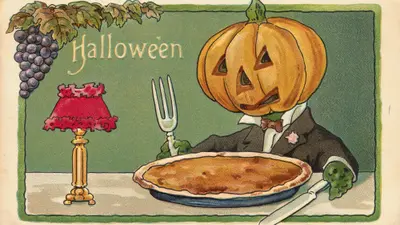
It’s the late 1700s, and a pumpkin sits on a colonial kitchen table. The flesh has been cooked until soft. But the hard part is still ahead. To turn the pumpkin into pie, the cook must mash it, scrape it, and force it through a sieve, separating smooth pulp from stubborn strings and fibers. There is no can of pumpkin puree. No food processor. Just the pumpkin, rudimentary kitchen tools, and a lot of elbow grease. The work could take hours, all for an eight-person dessert. An 1876 New England cookbook, for example, instructed cooks to simmer pumpkin for six to eight hours, stirring frequently, before rubbing it through a colander.
It seems like an absurd amount of work for dessert. Pumpkin flesh doesn’t naturally break down into a silky puree. Cooking softens its tissues, but turning the squash into smooth filling requires additional mechanical work.
For generations, cooks solved the problem with heat and muscle. Eventually, factories took over the work of cooking and processing pumpkins into puree. But the solution didn’t stop there. Growers also turned to pumpkin varieties with naturally smoother, less fibrous flesh, making the job easier before the squash even reached the factory.
The earliest-known pumpkin pie recipe is from 1796
Pumpkin was an important food in North America long before Thanksgiving became a national holiday. Indigenous peoples cultivated and prepared the squash in many forms, and European colonists adopted pumpkins as a plentiful crop. Colonists adapted their own pie-making traditions to the abundant squash, incorporating pumpkin into sweet and savory pies. By the 17th century, recipes for pumpkin-filled pies were appearing in English cookbooks.
In 1796, the first known American cookbook, Amelia Simmons’s American Cookery , included a recipe for “Pompkin Pudding” made with cooked pumpkin, milk , eggs , and spices. Before the pumpkin could be combined with the other ingredients, the recipe called for it to be strained, separating fine pulp


Comments
No comments yet. Be the first to share your thoughts.