What Minimalism Actually Means (And It’s Not Just White Space)
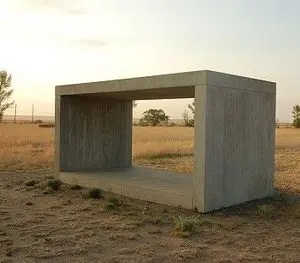
Minimalism has a branding problem. It has been reduced to a visual style: white walls, empty surfaces, sans-serif type, and a lot of nothing. Open any design blog and you will find minimalism defined by what it removes. Less color. Less decoration. Less stuff. The implication is that minimalism is an aesthetic of absence, a discipline of taking things away until only the essential remains.
That is not minimalism. That is a particular style that sometimes borrows the name. True minimalism is not about what you remove. It is about what you prioritize. It is a philosophy of attention, not a palette of white.
The Misconception
The most common misunderstanding is that minimalism equals emptiness. A room with a single chair and a blank wall is called minimalist. A website with three lines of text and a lot of scrolling is called minimalist. But these examples confuse the result with the process. The empty room is not minimalist because it is empty. It is minimalist because nothing in it is competing for attention. The website is not minimalist because it has little content. It is minimalist because every element serves a clear purpose.
The difference matters. A room can be empty and still fail to be minimalist if the emptiness is accidental or uncomfortable. A website can have a lot of content and still be minimalist if the content is organized with clarity and intention. Minimalism is not a number. It is a relationship between the user and the design.
The Origin
Minimalism as a movement began in the visual arts in the 1960s. Artists like Donald Judd, Agnes Martin, and Frank Stella rejected the expressive, gestural qualities of abstract expressionism. They favored simple geometric forms, industrial materials, and impersonal execution. The work was not about the artist’s emotion. It was about the viewer’s experience.
The minimalists were not trying to make things empty. They were trying to make things honest. They removed the illusion, the decoration, and the narrat
Comments
No comments yet. Be the first to share your thoughts.