South Korea will use emergency alert system to warn about exam cheaters
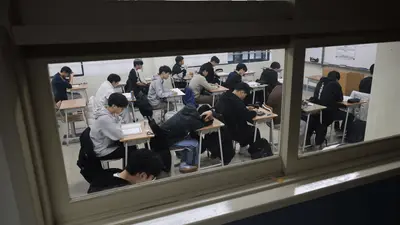
On Thursday morning, millions of phones across South Korea will belt out a loud, buzzing alert normally intended to warn residents about earthquakes or other disasters. This time, the alert is targeting a much different kind of public threat: sneaky standardized test cheaters .
Officials plan to send the notifications ahead of Suneung , the country’s notoriously gruelling, eight-hour-long college entrance exam, in an attempt to flush out any of the roughly 550,000 test-takers who may have smuggled in a banned smartphone. Proctors will also inspect all pairs of glasses for hidden cameras , and students wearing clothes with buttons will have to cover them with stickers.
The aggressive, last-minute measures come just days after a student in a national tax accountant exam admitted he used a miniature camera and a generative AI tool to achieve a near-perfect score. That surprise revelation sent educators and officials scrambling to come up with solutions to instill confidence in the upcoming test.
Korea’s measures come as educators around the world are struggling to keep up with a growing arsenal of AI-enabled tools that make cheating easier than ever. But while AI is the focus today, students have been tinkering with new tech and other creative ways to skirt the rules for as long as tests have carried weight.
Exposed cheater fuels a nationwide panic
The sudden rule changes in South Korea come days after a 34-year-old man named Han Won-seok posted a video on his lawyer’s YouTube channel admitting he used AI to cheat on the country’s national tax exam. According to the Associated Press , Han scored 397.5 out of 400 points on the first stage of the multiple-choice test, a suspicious result that made him the subject of several media interviews. Other test-takers saw those results and accused him of trickery.
Days after denying those allegations, Han reversed course. In the video, he admitted to using a miniature camera to photograph the exam questions, which were then



Comments
No comments yet. Be the first to share your thoughts.