Samsung just revealed the future of TVs in “Ultra-Small Micro-LED” plans –here’s why it matters
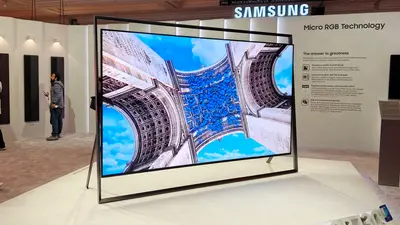
Samsung Display just issued a release regarding a substantial share buy-in of Ams Osram, making it the largest shareholder in the semiconductor company, which develops light-emitting technologies – such as those used in many of the best ultra-bright TVs of today.
That’s not all, though, with a strategic partnership also inked to accelerate the commercialisation of the next-generation Micro-LED technology, called Ultra-Small Micro-LED. The clue’s in the name here: that marks the next step in making Micro-LEDs even more “micro”.
What is Micro-LED?
(Image credit: Samsung) First, a quick reminder on the fundamentals of TV and, in turn Micro-LED.
Current LCD panels (that’s ‘Liquid Crystal Display’) are, in higher-end TV products, backlit by LEDs (light-emitting diodes), which are an inorganic product that emits light.
These full backlight array setups illuminate the image in ‘zones’ and can create even brighter sections for greater contrast. More zones require more LEDs, which eventually reach a limit in how closely they can be placed together.
But manufacturers have got more advanced in their efforts, squeezing LEDs’ scales down more and more, resulting in Mini-LED, then Micro-LED. They’re microns across in scale, which is mind-boggling to imagine.
More LEDs means greater output potential, thus greater brightness – which is why we’ve seen super-bright sets advancing step by step in recent years.
Why does Ultra-Small Micro-LED matter?
(Image credit: Future / Chris Hall) The answer to that is somewhat provided above: smaller LEDs provide the opportunity to group yet more together, thus creating more ‘zones’ that provide greater accuracy, deliver less light bleed in an image, and result in a more refined result.
In making LEDs smaller yet again, in Ultra-Small Micro-LED, there’s the potential opportunity to group these even closer together for an even more accurate result – and, of course, an even brighter one.
But there’s more to it than simply grouping together more, a



Comments
No comments yet. Be the first to share your thoughts.