Today I learned why Tim Berners-Lee chose not to patent the World Wide Web
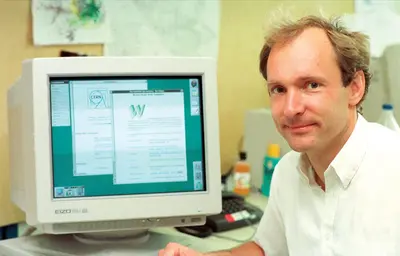
Every website you've visited today runs on technology nobody owns. Tim Berners-Lee invented the World Wide Web at CERN in 1989, but he never patented it. On April 30, 1993, CERN put the web software into the public domain , giving up all rights to it.
Berners-Lee has always been blunt about why. He explained that the web only worked if everyone could use it. "In order to succeed, therefore, it would have to be free," he wrote in an op-ed for The Guardian .
The Gopher problem
In the 1990s, the World Wide Web wasn't the only way to browse the internet. A system called Gopher, built at the University of Minnesota, was actually growing faster than the web at the time, according to Berners-Lee's account on NPR .
Then in 1993, the university announced it would charge some users a fee to run Gopher servers. According to Berners-Lee, Gopher traffic dropped off almost immediately. People started asking him whether CERN would do the same to the web.
That scare pushed him to get a signed declaration from CERN guaranteeing the web would stay free. His colleague Robert Cailliau later wrote that CERN weighed licensing the software commercially before choosing the public domain. Open-source licences were still in their infancy, so giving up the rights entirely was the cleanest option.
The final document needed endorsement from CERN management and signatures from at least two directors. It was signed on April 30, 1993.
By the end of that year, more than 500 web servers were running worldwide. In November 1993, the University of Illinois' National Center for Supercomputing Applications released Mosaic, the browser that first brought the web to a mainstream audience.
Free by design
Money was never the main concern. In fact, Berners-Lee worried that a commercial stake would make it hard to stay neutral about how the web developed.
That thinking carried over into the World Wide Web Consortium, the standards body he founded at MIT in 1994 to keep the web's core technologies open. In Feb



Comments
No comments yet. Be the first to share your thoughts.