the spectacle of entry: how concept car designers set entire bodies in motion
the moving architecture of the concept car
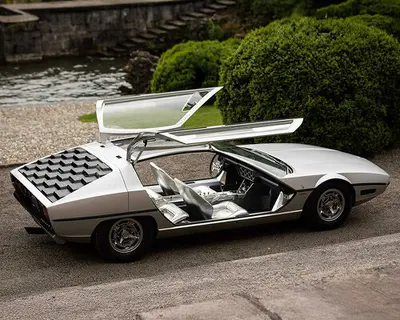
When Pininfarina presented its Ferrari 512S Modulo at the 1970 Geneva Motor Show, the Italian design team brought a vision of the automobile with almost all its familiar elements erased. The wheels were partially hidden beneath a white body, the roof barely rose above the hood, and the continuous black band of glazing gave little indication of how someone might get inside. To enter Paolo Martin’s futuristic concept car , the entire canopy had to slide forward.
The Modulo belongs to a radical period in automotive design when coachbuilders began to rethink the simple act of entering a car. With the freedom afforded by experimental prototypes, designers could do away with typical doors and set in motion much larger portions of the body. A windshield could become an entrance, and a roof could lift away to expose the entire cabin.
Read on as we revisit a series of these experiments from the 1960s through the end of the century. While much of the discussion around automotive design concerns the appearance of speed, these cars reveal some of their most dynamic qualities while standing perfectly still.
1970 Ferrari 512S Modulo concept 1970 Ferrari 512S Modulo concept
car designers made the door disappear
Seven years before the Modulo made its debut, a young Giorgetto Giugiaro had explored the possibilities of a continuous automotive shell with the Chevrolet Corvair Testudo . Designed at Bertone and presented in Geneva in 1963, the car had a distinctly organic profile. Its name, the Latin word for tortoise, alluded to the rounded body beneath which much of the mechanical equipment was concealed. The glass windshield and roof formed part of a single assembly that pivoted forward to expose the two seats.
The Testudo emerged at a time when the futuristic imagery of aviation and space exploration had entered the vocabulary of industrial design. The aircraft canopy offered an alternative to the upright door inherited from the hors


Comments
No comments yet. Be the first to share your thoughts.