How do electric cars actually work? A beginner’s guide to next-gen motoring
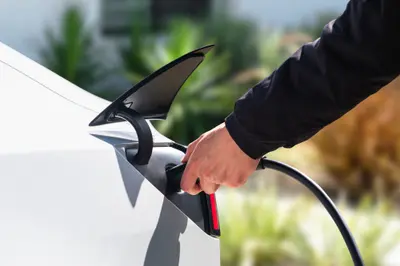
Electric cars are so simple to drive, it’s often easy to forget just how much is going on beneath the surface – and how different they are to cars with conventional engines.
The fundamentals are of course the same – you press the accelerator to speed up and the brake to slow down – but beyond that almost everything is different, from how energy is stored to how it reaches the driven wheels, and even how the brakes work.
Here’s a brief explanation of how electric cars work
How an electric car accelerates
Press the accelerator and the car’s computers tell the motor how much torque to deliver. The inverter converts direct current (DC) from the battery into alternative current (AC) for the motor. In most EVs, the motor turns the wheels through a single-speed reduction gear.
Whereas the power and torque output of an engine builds gradually, increasing as the revs rise through each gear, an electric car can deliver maximum torque from its first rotation.
From the driver’s seat, electric cars drive a lot like a regular automatic. There are no gears to shift through, and instead just a familiar Park-Reverse-Neutral-Drive selector.
How an electric car brakes
Electric cars have conventional brake discs and pads, like most other cars. But they can also use their motors to slow down, using a process called regenerative braking. In simple terms, the wheels turn the motor, which acts as a generator. The resistance from generating electricity slows the car, and some of that energy goes back into the battery.
In some cases, regen braking is strong enough to slow a car from a motorway cruise to a complete stop, without the driver ever pressing the brake pedal and using the conventional brakes. Some electric cars let you adjust how strong the regen braking system is, or disable it completely – and in that state, the car will instead coast freely when you lift off the accelerator.
On a long descent, you might even see the battery percentage increase slightly, as the regen sys


Comments
No comments yet. Be the first to share your thoughts.