Low-cost mineral analysis could help geologists trace how rocks formed and deformed
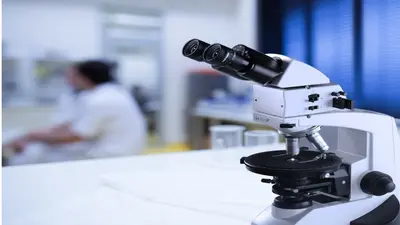
Scientists from Tohoku University in Japan have adapted existing laboratory equipment to analyze the composition of rocks. A standard polarized microscope is used alongside a computer program called NicoNavi, which analyses footage of rock samples as they are rotated.
This allows the size, shape and crystallography of minerals within a rock sample to be analyzed. Such analysis can aid our understanding of a rock’s past both during and after its creation.
Minerals can even provide evidence of a rock’s deformation and of activity which has occurred deep under the Earth’s surface. Typically, specialized equipment has been used to analyze these aspects of a rock and this can be a time-consuming process.
Initially, a rock thin section is viewed using a polarizing microscope. Simultaneously, a camera films the sample as it is rotated through 360 degrees. As minerals within a rock re-orientate themselves, their light refraction and color alter under polarized light.
NicoNavi then analyses this footage and isolates the minerals and their interfaces. Subsequently, it generates detailed data regarding the microstructure of the sample.
In addition, the program is able to recognize the type of mineral present and analyze the 3D crystallographic c-axis orientation of appropriate minerals such as quartz (SiO₂). Additional optical analysis, along with a small-angle sample rotation, can allow this quartz analysis to occur within around 10 minutes.
NicoNavi maps mineral structures
Dr Tan Furukawa from the Graduate School of Science at Tohoku University explained that the novelty of this method is that it enables quantitative analysis to be performed on commonly available laboratory equipment.
“We aimed to develop a simple quantitative method of analyzing rocks which could be conducted on widely available laboratory equipment. We hope that by merging basic optical analysis with computerized image analysis, we will facilitate scientists’ ability to gather and contrast extensiv


Comments
No comments yet. Be the first to share your thoughts.