From a rare bird to a bat in the dark, these are the top 5 wildlife photos of the week
Wildlife photography’s biggest challenges come from the long lenses and fast shutter speeds required to freeze the motion of the world’s creatures. But the animals that are most active in the dark tend to be even more challenging to photograph.
This week, as I looked through wildlife photography from around the world, I was mesmerized by shots of bats in the dark and owls just before nightfall. These are the top five wildlife photographs that I’ve spotted this week.
A rare black-winged stilt
(Image credit: Qin Gang / VCG / Getty Images) While the black-winged stilt is not considered endangered globally, it’s rare to spot one in China’s Guiyang in Guizhou Province. The sighting this week was the first confirmed record of the species in the city, which drew a number of birders and photographers to the Dongqiba Wetland.
Photographer Qin Gang captured this photo with the Sony A7 V and the FE 100-400mm f/4.5-5.6 GM OSS lens.
A spectacular shot of a long-tongued bat in the dark
(Image credit: Getty Images) Photographing nocturnal creatures is a particularly challenging subgenre of wildlife photography, thanks to the challenges of limited lighting.
This photograph by Ronen Tivony perfectly lights a long-tongued bat feeding on the nectar from a banana flower in Costa Rica. Tivony captured the shot with the Sony A1 II and a flash.
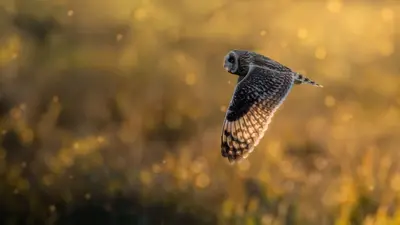
A short-eared owl flying over a golden field
(Image credit: Jerome Murray / Alamy) Like bats, owls tend to be more active at night, making photographing them difficult. This shot by Jerome Murray freezes a short-eared owl at golden hour. I love how the background melts into golden bokeh in this shot.
A close-up portrait of a mantis
(Image credit: Getty Images) The smallest wildlife is often challenging to get up close to, but this shot of a Transcaucasian giant mantis feels like an insect portrait. Photographer Ivan Rusev captured this image in the Tuzly Lagoons National Nature Park in Ukraine. I love all the seashells under the insect’s feet t


Comments
No comments yet. Be the first to share your thoughts.