Sony’s Most Expensive Walkman Ever Bets on Converting Lossless Music to DSD to Make It Sound More Analog
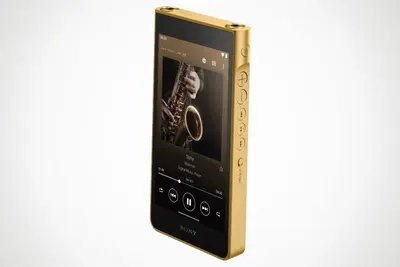
Even a lossless stream from Qobuz appears to go through two stages of digital conversion before reaching your headphones.
For audiophiles spending thousands of dollars on a dedicated music player, having control over how their music is processed can be an important consideration.
With its new $5,899 flagship Walkman , Sony is placing greater emphasis on DSD conversion, a technology the company believes brings digital music closer to analog sound. It’s also extending that processing to music played through streaming services.
But one important setting remains unconfirmed in Sony’s product documentation. To understand why it matters, we need to look at what happens to lossless music inside the new Walkmans.
Table of Contents
What the Engine Does to a Lossless Stream
What Sony’s Pages Say About Switching It Off
What Source Direct Actually Covers
A 59% Price Jump for the Flagship Walkman
Table of Contents
What the Engine Does to a Lossless Stream
What Sony’s Pages Say About Switching It Off
What Source Direct Actually Covers
A 59% Price Jump for the Flagship Walkman
What the Engine Does to a Lossless Stream
The DSD Remastering Engine takes incoming PCM audio and resamples it into a signal equivalent to 11.2MHz DSD before conversion to analog.
On the previous NW-WM1ZM2 and NW-WM1AM2 , that processing was limited to downloaded files played through Sony’s built-in W.Music app.
The new players extend DSD remastering to music streamed over Wi-Fi . For instance, a hands-on review suggests this includes Spotify, Qobuz, and Amazon Music, though Sony specifies that support outside W.Music requires a wired connection .
Streaming through these apps may also introduce another conversion stage before DSD remastering takes place. Preliminary testing suggests that audio is resampled to 48kHz by default or fixed at 192kHz with high-resolution streaming enabled, regardless of the track’s original sample rate.
Sony believes converting PCM to DSD produces a more analog-like s

Comments
No comments yet. Be the first to share your thoughts.