AMD is adding tamper-resistant hardware to its chips to protect from physical attacks
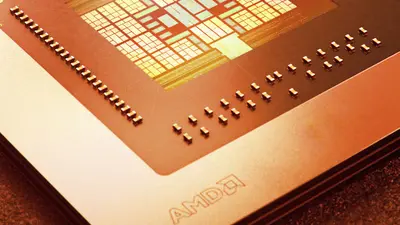
AMD's Versal TR adaptive SoCs bond a sensor die to the silicon backside that detects physical attacks and blocks boot if removed
Post-quantum ML-DSA and SLH-DSA acceleration arrives after rivals Altera and Lattice already shipped post-quantum secure boot
Samples are not due until the second half of 2027, and AMD itself says tamper-resistant does not mean tamper-proof
AMD has unveiled a family of adaptive chips with their own built-in bodyguard.
The company's new Versal tamper-resistant devices bond a sensor-based protection die to the back of the main compute die, where it shields the silicon, watches for physical attacks, and stops the chip from booting if it is tampered with or removed.
The chips, specifically the 2VE3358TR, 2VE3558TR and 2VE3858TR, are all variants of the Versal AI Edge Series Gen 2 adaptive SoCs that AMD first unveiled alongside Arm in 2024 , and will look to cater to the likes of defense systems, data center networking, financial technology and critical industrial infrastructure.
A second die guarding the side that nobody watches?
One might ponder why the backside is suddenly important: most high-performance chips are flip-chip packaged, mounted face down, so the transistors sit against the package while the bare silicon substrate faces up.
Silicon is transparent to near-infrared light, so an attacker who removes the lid and thins the substrate can observe switching transistors through it, or fire a laser to inject faults, without ever disturbing the metal layers where traditional on-die mesh shields sit.
Electronics Journal notes that defending this surface has generally relied on board- or enclosure-level measures, such as active meshes and potting. AMD knows this terrain from the receiving end: In September 2026, an AMD security bulletin covering its older 7-series FPGAs described a researcher recovering partial bitstream plaintext via contactless optical probing of the die's backside.
AMD's response was somewhat blunt then: that kind of acc



Comments
No comments yet. Be the first to share your thoughts.