AI-Driven Shortages in Basic PCB Components Could Be Worse Than the 2021 Chip Crisis, Report Warns
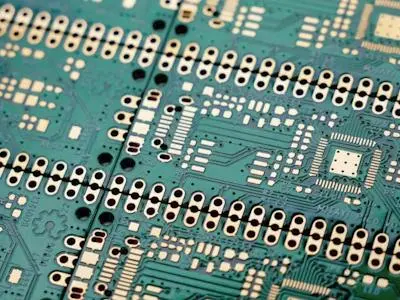
The electronics industry may be about to experience yet another shortage induced by the artificial intelligence (AI) bubble, but this time in something more fundamental than high-capacity memory components: printed circuit boards (PCBs.)
"Demand for printed circuit boards (PCBs) is outrunning supply at every stage of the chain, from glass fabric and resin to finished boards," a report titled The PCB Squeeze, prepared by the Global Electronics Association, warns. "Fabrication capacity is growing, particularly in Asia, but the limits that matter are upstream: glass, resin, foil, and equipment. Automotive, industrial, medical and defense programs are being crowded out as AI absorbs scarce capacity. Availability, not price, is now the binding risk."
While critics and proponents alike can argue as to the positive and negative impacts of the artificial intelligence bubble, and the large language model (LLM) technology on which it is built, nobody can deny the effect it has had on the electronics industry. Insatiable demand for memory and compute components have seen prices skyrocket, which has directly impacted makers' wallets: popular personal computers, smartphones, and single-board computers are now launching with less RAM and storage or at much higher prices, with some models of Raspberry Pi having more than doubled in price since the bubble's inflation began.
Similar constraints hitting PCB materials and tooling, though, could lead to a much bigger impact — rivaling or even exceeding, the Global Electronics Association projects, the chip shortage crisis of 2021. "Prepreg [pre-impregnated fiberglass pricing] rose about 180% in the year to August 2026," the report explains," and E-glass fabric is up about 140% from its Q3 2025 low. Laminate makers have raised prices repeatedly over the past 12 to 15 months, according to Associate estimates, including increases of up to 30% on laminate and prepreg effective September 1. Shortages — which began in high-end materials f


Comments
No comments yet. Be the first to share your thoughts.