Hi-Fi Brands Are Ditching DAC Chips for Vintage Tech That Measures Far Worse, and Audiophiles Are Loving It
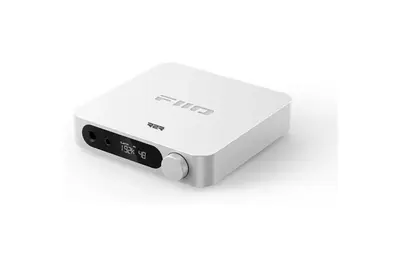
One budget model struggles to deliver even 12 effective bits of resolution, but that hasn’t stopped its growing appeal.
Resistor-ladder DACs are making an unlikely comeback , and the list of manufacturers embracing them keeps growing.
FiiO has already brought R-2R technology to several price points, while Eversolo is now entering the market with its $1,280 DAC-R8 . The growing interest is particularly curious given how far conventional DAC chips have advanced in accuracy, noise control, and distortion.
Manufacturers are also putting serious engineering effort into improving these older converter designs, with some claiming performance that approaches modern chip-based DACs.
So how much progress have they actually made? Independent measurements of the models available so far offer a useful reality check.
Table of Contents
What Independent Tests of the New R-2R DACs Reveal
How the DACs Are Addressing Their Performance Limitations
Why Audiophiles Still Want R-2R DACs
Table of Contents
What Independent Tests of the New R-2R DACs Reveal
How the DACs Are Addressing Their Performance Limitations
Why Audiophiles Still Want R-2R DACs
What Independent Tests of the New R-2R DACs Reveal
When FiiO added a resistor-ladder version of the K11, it kept the same pair of SGM8262-2 headphone amplifier chips. The converter was the main change.
The original K11 uses a Cirrus Logic CS43198 chip, while the K11 R2R replaces it with a differential ladder built from 192 thin-film resistors rated at 0.1% tolerance. The R2R model also offers selectable oversampling (OS) and non-oversampling (NOS) modes.
Distortion did more to limit the K11 R2R’s measured performance than background noise did. In its bench tests, Archimago’s Musings found that errors showed up even at very low signal levels.
Distortion and noise: THD+N measured between −70 and −73 dB with a full-scale (0 dBFS), 1 kHz test signal. At −70 dB, that’s approximately 0.03% combined distortion and noise.
Effective resolut



Comments
No comments yet. Be the first to share your thoughts.