Scientists transform steel dust and seashells into solar-powered nanomaterial
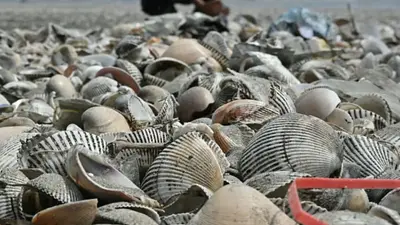
Steel sludge and fishery industry by-product shells are being transformed into a solar-powered material by Brazilian scientists. Scientists at the Federal University of São Carlos (UFSCar) and Federal University of Rio Grande do Norte (UFRN) have created a nanostructured material which degrades methylene blue (MB) and can make hydrogen.
This new material is a heterojunction, and is made from hydroxyapatite (HAp) derived from sea-shells and iron oxide (Fe₂O₃) which has been extracted from the dust from a blast furnace. This by-product is produced in the steel industry and is generally regarded as industry waste. A heterojunction is where there is a boundary between materials which have different electrical properties and this affects how they react to light.
Three samples were produced with differing levels of iron oxide, 20%, 40% and 60% creating HFe20, HFe40 and HFe60. Analysis was undertaken of these samples and they were then analyzed for their behavior when subjected to solar power. The most successful sample was HFe40.
Methylene blue is commonly used in the textile industry. If water containing this dye is discharged into rivers and lakes, it can restrict light transmission and affect the photosynthetic processes of living organisms within the water. Following two and a half hours of solar irradiation, HFe40 was able to degrade around 75% of methylene blue in solution.
Potential for water purification and hydrogen production
Scientists also analyzed how well the material could produce hydrogen. 20 milligrams of HFe40 was introduced into 20ml of 10% lactic acid and then irradiated with sunlight for four hours. Throughout this process a gas sensor recorded any hydrogen generated.
Over 25 micromoles of hydrogen was produced per gram of HFe40, equating to around 0.05 milligrams. Investigations were then carried out to analyze the material’s electrochemical properties.
It was discovered that the band structure of both HAp and Fe₂O₃ impacted on hydrogen genera


Comments
No comments yet. Be the first to share your thoughts.