Virtual simulator puts firefighters inside immersive 360-degree bushfire scenarios
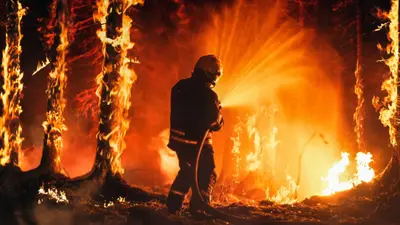
New South Wales’ firefighters can now train for computerized bushfire scenarios based on Australia’s most damaging periods of fire activity. UNSW Sydney and FRNSW have launched iFire 2.3 which replicates the 2009 Black Saturday and 2019-20 Black Summer bushfire events.
Users are able to enter a 360-degree movie-like simulation where they can both view and train for a virtual bushfire and its evolving nature. This provides a training ground for scenarios that would otherwise not be able to be replicated in a safe manner.
Members of the FRNSW Education and Training Simulation team were involved in the design of the latest iFire modules. People can manipulate 12 variables such as temperature, heat, humidity and wind.
They can then witness the impact of these variables on a bushfire and understand how they can render a fire scene even more difficult to manage. Both entry-level and senior staff can undertake the training.
iFire simulates unpredictable bushfire behavior
Building on its foundations of science based virtual reality, the system’s third version includes sophisticated artificial intelligence. While a bushfire simulation is underway, people can manipulate weather variables such as wind speed and then witness how a fairly benign fire can escalate to become either extremely severe or even disastrous.
UNSW Vice-Chancellor and President Professor Attila Brungs AO said the university and FRNSW had progressed this technology so firefighters could be trained to meet the challenges of an increasingly variable climate which is heightening the likelihood of unforeseeable bushfire events.
“By strengthening the preparedness and skills of all levels of firefighters who protect our lives and livelihoods, this partnership and initiative is a clear example of progress for all in action,” Brungs said.
Scientia Professor Dennis Del Favero, Director of iCinema Research Centre at UNSW Sydney, said mega-bushfires sometimes defy current knowledge and approaches to managing t

Comments
No comments yet. Be the first to share your thoughts.