A High-End Hi-Fi Brand Is Betting on Class G to Solve an Amplifier Problem That Has Persisted for Nearly 50 Years
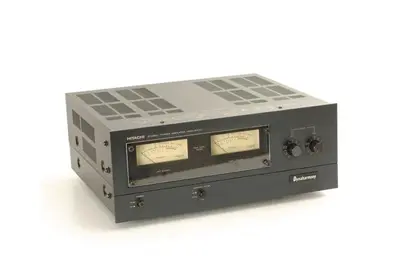
The new amplifier consumes less than half the maximum power of its predecessor, but that improvement comes at a cost.
Class G has been around for roughly half a century and remains one of the less common amplifier designs in home hi-fi. Much of that comes down to the engineering challenges involved and the limited practical benefits manufacturers have historically been able to achieve.
Chord Electronics believes its proprietary error-correction technology can address one of those longstanding problems. That’s why the company has switched from Class AB to Class G for its new ULTIMA 7 stereo power amplifier, claiming to have eliminated distortion caused by switching between power supply voltages.
But with independent tests still to come, it’s worth examining what has kept other manufacturers from taking the same approach.
Table of Contents
How Class G Works and Where It Glitches
How Chord Plans to Fix the Switching Problem
What Buyers Gain and Lose With the ULTIMA 7
How It Compares to the Competition
Price and Availability
Table of Contents
How Class G Works and Where It Glitches
How Chord Plans to Fix the Switching Problem
What Buyers Gain and Lose With the ULTIMA 7
How It Compares to the Competition
Price and Availability
How Class G Works and Where It Glitches
Class G amplifiers use multiple power supply voltages, known as rails. At ordinary listening levels, the amplifier uses a lower-voltage supply and switches to a higher-voltage one when musical peaks demand extra power.
Using the higher-voltage supply only when needed means less energy is wasted as heat. This allows for smaller heatsinks and potentially more compact amplifier designs.
The difficulty lies in the transition between those power rails. Switching between supply voltages can introduce small disturbances into the audio signal, a source of distortion that has troubled Class G designs since the 1970s.
Amplifier designer Douglas Self traces Class G’s origins to an August 1976 article and cre


Comments
No comments yet. Be the first to share your thoughts.