Inside physical AI in 2026: How machines learned to reason and act in the real world
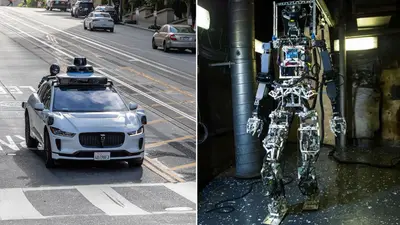
For the past several years, artificial intelligence lived primarily inside chat windows and data centers, generating text, code, and images without ever touching a physical object. In 2026, that boundary has decisively broken down. Physical AI, intelligence embedded inside machines that perceive, reason about, and physically manipulate the three-dimensional world, has moved from demos and simulations into commercial factories, logistics hubs, and autonomous vehicles.
Unlike regular industrial robots that execute rigid, pre-programmed scripts inside safety cages, physical AI systems interpret unstructured environments in real time. Rather than relying on separate software pipelines for computer vision, path planning, and motor control, modern embodied systems unify perception and action inside end-to-end neural architectures governed by physical laws like gravity, friction, and momentum.
Vision-Language-Action models and reasoning on wheels
One of the defining breakthroughs of 2026 is the maturation of Vision-Language-Action (VLA) foundation models. Whereas standard vision-language models describe what a camera sees, VLA models translate visual feeds and natural-language instructions directly into continuous motor commands for robotic arms, grippers, and legged platforms.
Open-weight architectures such as OpenVLA, Octo, and Physical Intelligence’s Pie0, alongside smaller distilled variants like SmolVLA, have lowered the barrier for engineers to fine-tune generalist manipulation policies instead of hard-coding every movement.
In autonomous driving, VLA architectures have evolved to tackle “long-tail” edge cases. These include rare, unpredictable hazards that defeat purely pattern-matching software. In January 2026, NVIDIA introduced its open-source Alpamayo family of chain-of-thought reasoning models, followed in November by Alpamayo 2 Edge , a compact 2.65-billion-parameter model capable of generating causal driving explanations alongside trajectories at 10 Hz w


Comments
No comments yet. Be the first to share your thoughts.